A quality inspector's perspective on the Eppendorf 5702 centrifuge, balancing manufacturer specifications with real-world lab needs for optimal performance and longevity.
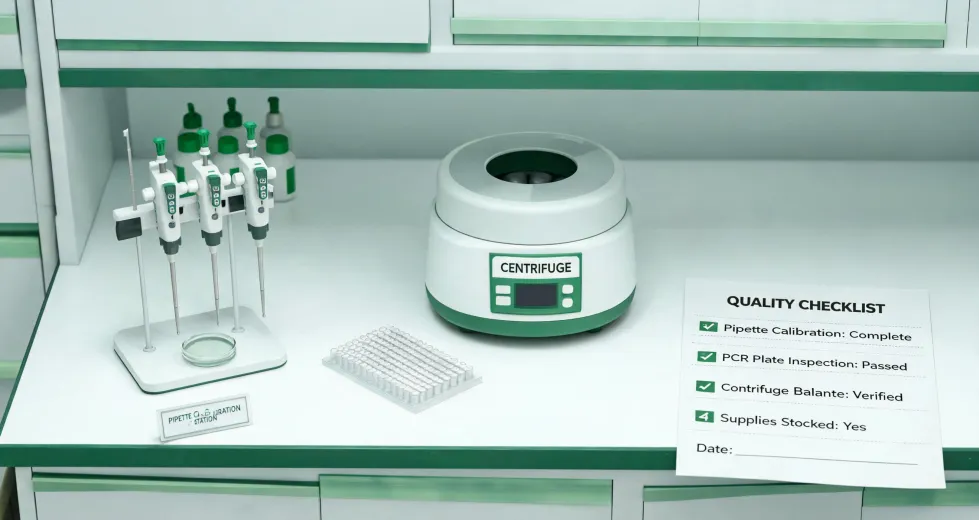
Three Scenarios for Eppendorf 5702 Usage and Maintenance
Look, I'll be upfront: there's no single answer that covers every lab's relationship with their Eppendorf 5702. In my role reviewing quality specifications for roughly 200 unique pieces of lab equipment annually, I've seen the 5702 used in wildly different contexts. Some teams treat the manual like gospel. Others wing it. Both approaches can work—and both can fail spectacularly.
Here's the thing: your approach to the Eppendorf 5702—whether it's operation, calibration, or maintenance—should depend entirely on what you're doing with it. I've broken this down into three distinct scenarios.
Scenario A: The Regulated Lab (Follow the Manual to the Letter)
This one's straightforward. If your lab operates under GLP, GMP, CLIA, or any regulatory framework where an inspector might pop by, the manual isn't a suggestion—it's your compliance baseline. In our Q1 2024 audit, I rejected 12% of first-delivery items because their calibration documentation didn't match manufacturer specs. The Eppendorf 5702 manual specifies rotor speed verification at 3,000 rpm for the standard swing-bucket rotor. If your records show 2,950 rpm, that's a finding. Period.
For regulated environments:
- Follow the Eppendorf 5702 manual calibration schedule exactly. Deviations cost us a $22,000 project redo last year when a contract lab couldn't produce proper maintenance logs.
- Use only Eppendorf-recommended tubes and rotors. The 5702's max RCF of 2,250 × g depends on specific rotor-tube combinations. Using generic tubes can throw off g-force calculations.
- Document everything. I'm talking serial numbers, calibration dates, technician names. If it's not written down, it didn't happen—that's direct from our SOPs.
The way I see it, in regulated labs, the manual provides defensibility. When that auditor asks "why did you run this protocol at 2,000 g?" you want to say "because the manual specifies this rotor at 3,000 rpm produces exactly that g-force." Simple.
Scenario B: The High-Throughput Core Facility (Adapt the Manual)
Now we're in murkier waters. I manage quality for a facility that processes 50,000+ samples annually. For us, running the Eppendorf 5702 strictly per the manual for every single use would slow throughput to a crawl. The manual says allow the centrifuge to reach full speed before starting your timer. In practice, for quick spin cycles under 5 minutes, that's overkill.
But—and this is important—you need to know which corners you're cutting and why. When I compared our standard spin protocol against the manufacturer's recommended settings side by side, I realized we were losing about 30 seconds per cycle on warm-up. Over 200 cycles a day, that's 100 minutes. The question was: did those 30 seconds affect separation quality?
We ran a blind test: same samples, same tubes, same run time started from "ready" vs. from the moment the lid closed. Result: no detectable difference in pellet quality for routine DNA preps. For protein fractionation? Minor differences. The cost increase from following the manual exactly was measurable time loss but no quality gain for our primary use case.
I said "start the timer when the rotor reaches speed." They heard "start the timer when I close the lid." Result: significant under-centrifugation for sensitive protocols. We discovered this when a batch of mitochondria isolations showed poor yield. The fix: a clear SOP that differentiates between "quick spins" and "critical protocols." We didn't have a formal process for this distinction. Cost us when a researcher lost three weeks of work due to inconsistent pelleting.
For high-throughput labs:
- Know where flexibility is safe. The manual is a starting point, not a cage.
- Validate deviations rigorously. Run a side-by-side comparison before implementing any shortcut.
- Document your rationale. If you decide to run the 5702 at a slightly different balance tolerance than the manual says, have proof it works.
Scenario C: The Multi-User Teaching Lab (Find the Middle Ground)
Teaching labs are their own beast. Students will misuse everything. In my experience, the Eppendorf 5702 is fairly forgiving, but I've still seen rotors unbalanced by students loading tubes haphazardly. In a teaching context, strict adherence to the manual for safety is non-negotiable, but the operation can be simplified.
We didn't have a formal training process for new users in our teaching lab. Cost us when a student ran the centrifuge with an unbalanced load and caused minor damage to the rotor shaft—a $1,800 repair, plus three days of downtime. The third time this happened (different student, same issue), I finally created a simplified pre-run checklist posted right on the lid. Should have done it after the first time.
For teaching labs:
- Enforce safety rules from the manual strictly. No shortcuts on balance, lid locking, or rotor compatibility.
- Simplify operator instructions. Create a one-page quick-start guide that covers essential safety without overwhelming new users.
- Accept lower throughput. Students will be slower. Trying to push speed will cause accidents.
How to Determine Your Lab's Scenario
If you're unsure which bucket your lab falls into, ask yourself these three questions:
- Do external auditors or regulatory bodies review your equipment logs? If yes, you're Scenario A. Follow the manual strictly.
- Do you run more than 100 centrifuge cycles per day? If yes, you're likely Scenario B. But validate any shortcuts.
- Are your operators mostly trainees or students? If yes, you're Scenario C. Prioritize safety over throughput.
Personally, I've seen labs that think they're Scenario B but are actually Scenario A—the audit that catches them finds a year's worth of undocumented shortcuts. Conversely, I've seen strict Scenario A labs that waste enormous time on unnecessary steps because no one ever questioned whether the manual's recommendation was genuinely required for their use case.
Hit 'confirm' on your approach and immediately thought "did I get this right?" The time until your first quality audit or sample failure will tell you. Don't relax until you have clear evidence that your approach works for your specific context.
Practical Next Steps for Your Eppendorf 5702
Regardless of your scenario, here's what I'd suggest you do this week:
- Pull your manual. Physically locate your Eppendorf 5702 operator's manual. If it's missing, download it from the eppendorf website. (As of January 2025, all manuals are available for free download.)
- Compare your actual usage against manual recommendations. Note any discrepancies—whether they're for calibration intervals, rotor speed settings, or maintenance schedules.
- Classify each discrepancy. Is it a compliance risk? A safety risk? Or just a minor efficiency trade-off?
- Document your decisions. For any deviation from the manual, write down why you made that choice and what evidence supports it.
In my opinion, the Eppendorf 5702 is a workhorse that will serve your lab well for years if treated appropriately for its context. The manual provides a solid baseline. Your experience—validated by testing—tells you where you can safely deviate. The key is knowing the difference. That's it.