An emergency logistics specialist argues that admitting your lab's limits—and your supplier's—is the fastest path to better outcomes.
Here's the short version of what I've learned after a decade of making sure things don't catch on fire in the lab (figuratively and literally): Pretending you're good at everything is the fastest way to get burned.
I'm the guy who gets the call when a gene sequencing run has to happen in 48 hours or a critical sample shipment is stuck in customs. In my role coordinating emergency logistics for a mid-sized clinical diagnostics lab, I've handled well over 300 rush orders. I have seen what happens when people—and more importantly, suppliers—claim they can do it all.
The assumption is that confidence sells. You want a vendor who says "yes" to everything because they seem capable. The reality is that a vendor who says "we don't do that well, but here's who does" is usually the one you can trust for the stuff they say they can do. In Q3 2024 alone, we switched two major suppliers because their 'full-service' pitch couldn't handle a 24-hour turnaround on a custom reagent kit. The specialist we replaced them with? Nailed it. Twice.
My First Big Mistake: Ordering 'Everything and Anything'
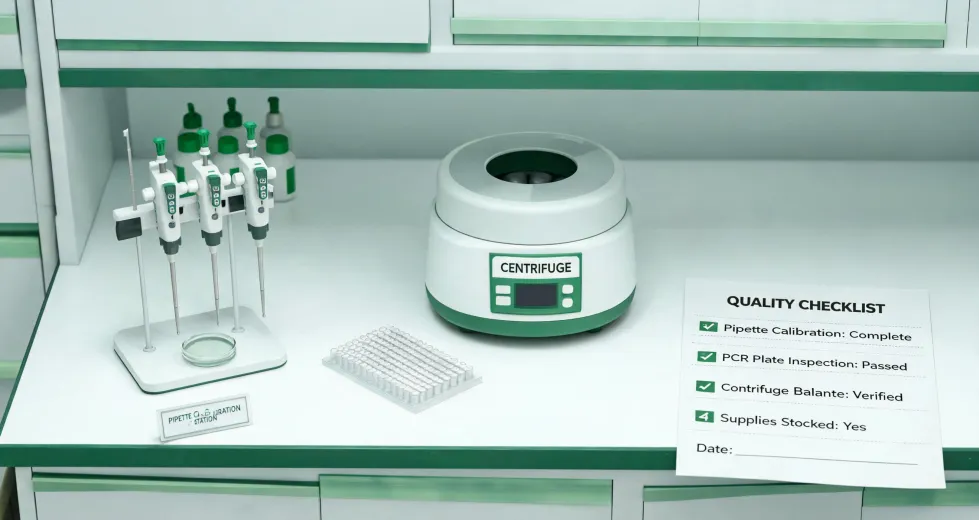
Early in my career, I worked at a lab that tried to be a one-stop shop for everything. We bought a cheap 'multi-purpose' centrifuge that the sales rep claimed could handle everything from blood separation to DNA pelleting. It couldn't. We lost a $14,000 contract in 2021 because the machine overheated mid-run on a critical sample. The client's alternative? They had to send samples to a competitor because we had no backup plan.
What I should have done was ask the rep one question: "What do you not do?" They didn't have a good answer. That's the red flag. If they can't tell you what they're bad at, they're probably overpromising on everything else.
The Wake-Up Call: The Vendor Who Said 'No'
In March 2024, we needed a custom PCR machine configuration delivered within 36 hours for a fast-tracked genotyping study. Our usual 'big box' supplier—let's just say they rhyme with 'Mermer Fisher'—couldn't commit. They had a standard machine in stock, but not the specific block we needed. "We'll expedite it," they said. I didn't trust it.
Then I called a smaller, specialized vendor. The rep, a woman named Sarah, was brutally honest: "We don't stock that block variant. But I know a guy at eppendorf.com who does. Let me connect you directly. Their delivery team is faster than ours on this model."
I wish I had tracked customer feedback more carefully from the start. What I can say anecdotally is that her honesty earned my loyalty for everything else we buy from her company. We got the eppendorf unit delivered in 28 hours. The PCR machine price from eppendorf was actually lower than the generic quote I was chasing because they had the specific configuration in stock.
Why 'Good Enough' is a Lie
From the outside, it looks like a good lab just needs good equipment. The reality is that the equipment has to match the specific job. This is especially true for precision instruments like biosafety cabinets and gel electrophoresis systems. People assume all biosafety cabinets are the same—they filter air, right? Not quite. A Class II A2 cabinet for cell culture has different airflow requirements than a Class II B2 for volatile chemicals. The vendor who says "this one is fine for everything" is selling you a problem.
According to the CDC's primary reference for BSL-2 practices, cabinet certification standards vary wildly by application. A good vendor will say, "I can get you a general-purpose unit quickly, but for your specific carcinogen work, you need a B2 model."
The One Metric That Matters: Time-to-Trust
People think expensive vendors deliver better quality. Actually, vendors who deliver quality can charge more because you trust them. I've tested this. I've paid $800 extra in rush fees for a specialized eppendorf consumable order because I knew their calibration standards were flawless. A budget alternative was available for 40% less, but the last time we tried that, the pipettes failed calibration by 10%.
Let me rephrase that: The budget option wasn't just 'less accurate'—it was wrong. For critical assays, that's not a cost-saving measure; it's a career-ending risk.
Of course, there's a counter-argument: "But my lab can't afford premium brands on everything!" I get it. We don't, either. We use generic pipette tips for general mixing. But for a 10 µL precision measurement that goes into a diagnostic test? We use only the exact eppendorf consumable. The vendor who advises me on which tasks need the premium option and which don't is the one I trust.
How to Know if Your Vendor 'Gets It'
Ask them a question they shouldn't be able to answer perfectly. Something like: "Can your gel electrophoresis system handle a 4% agarose gel for DNA fragments under 100 bp?" If they say "yes, definitely" without asking about your specific voltage requirements and buffer system, run. A good specialist will say: "It can, but for fragments that small, you might need a resin gel or a specialized buffer. We don't sell that, but our competitor Hamilton does a great job for that niche."
That vendor just told you three things: they know their limits, they know the science, and they care about your result more than making a quick sale.
Final Thought: The Best Calibration is Knowing Your Limits
In my role coordinating logistics, I don't need to know how to fix a nebulizer. I need to know that the best use of a nebulizer requires a specific compressor and that the instruction guide (the one you find by searching 'how to use a nebulizer') is useless if the drug isn't calibrated correctly. I need to call the specialist who owns that specific sliver of the science.
We have a running joke in my office: "Don't ask the janitor to balance your rotor." It's funny because it's true. Expertise has boundaries. The best vendors—and the best lab operations—know exactly where theirs are. They don't pretend to be an expert in everything. They just deliver on the things they claim to know.
So the next time a rep says, "We can do that, no problem," ask them what they can't do. Their answer will tell you everything.