A quality manager recounts the story of how a seemingly minor discrepancy in an Eppendorf 5810R service manual almost cost a lab a critical project, and how the experience changed their approach to verifying equipment documentation.
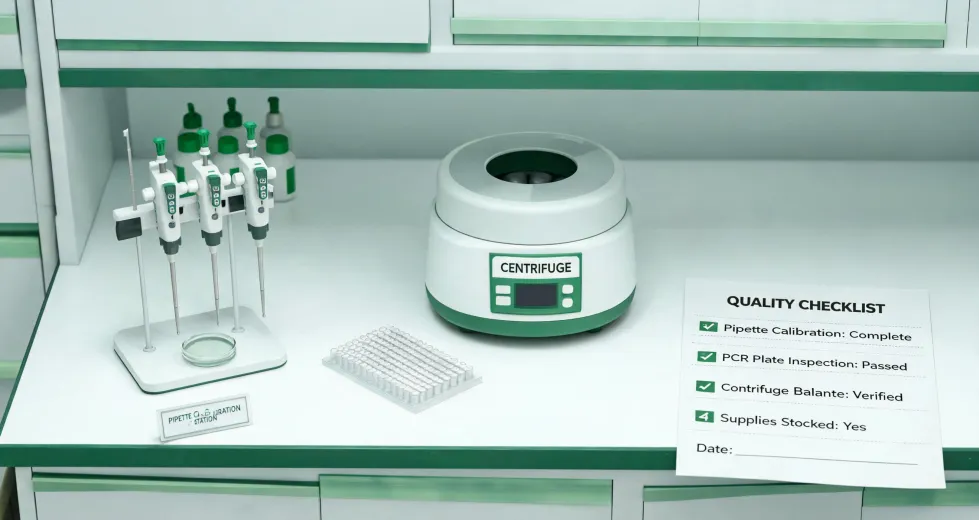
It was a Tuesday afternoon, and I was reviewing the final deliverables for a major quality audit we were conducting for a new client. They're a mid-sized contract research organization (CRO) specializing in mass spectrometry. They had just taken delivery of a brand-new Eppendorf 5810R centrifuge, a staple for their sample prep workflow. Everything seemed in order. The unit was installed, the user training was scheduled, and the packing list was complete. But then I got a call from their lab manager.
“The manual,” she said, “the service manual PDF you sent with the unit. It doesn't match.”
In my role as a quality compliance manager, I review roughly 200 unique items annually—from pipette calibration certificates to packaging specifications. I've rejected about 7% of first deliveries in 2024 alone, mostly due to packaging inconsistencies or missing traceability labels. But a manual? That was a new one.
She explained that the digital service manual we had included for the 5810R had a table of recommended rotor speeds that conflicted with the physical label on the unit's rotor chamber. The discrepancy was small—a variation of 200 RPM for one specific rotor—but in mass spectrometry, a slight mis-match in centrifugal force can alter the precipitation of proteins, affecting the quality of the sample. “If I'd followed this manual,” she said, “I would have set up a run that our tech team would have flagged immediately. We'd have lost a day of work.”
I should mention that we sourced this particular unit from a secondary distributor to expedite the client's urgent timeline. We didn't buy directly from Eppendorf. Looking back, that was the root of the problem—a lack of a direct, verified source chain for the documentation.
I asked her to forward the manual. When I compared the PDF on my screen against the official Eppendorf 5810R service manual PDF on the Eppendorf website (source: eppendorf.com, accessed Q2 2024), I saw exactly what she meant. The PDF we'd provided was either an older draft or a version for a different sub-model. The rotor speed table was off. The calibration procedure was diagrammed slightly differently. The torque specs for the lid lock were missing a decimal point.
Now, I'm a bit OCD about these things—it's why I got into quality control in the first place. I remember thinking: This is going to cost us. Not the manual itself, but the trust. The client now had a perfectly functioning piece of high-quality German equipment—a genuine Eppendorf—but they were questioning the integrity of the supporting documentation. They had a valid point.
I called our sourcing team. "Who sent this file?" The answer was a shrug. It came from the distributor's generic support email. It wasn't malicious; it was just process failure. The distributor had downloaded a manual from a file-sharing site and assumed it was the correct one.
We had two choices. Option A: Apologize and say, "We'll just download the correct one from the Eppendorf site." Option B: Actually fix the process so it couldn't happen again.
I'm a stickler for process. The vendor who lists all fees upfront—even if the total looks higher—usually costs less in the end. Same with documentation. The vendor who provides a verified source link upfront is more valuable than the one who just provides a PDF.
So we went with Option B. I pulled the correct Eppendorf 5810R service manual PDF from the official source, sent it to the client with a confirmation that it had been verified against the serial number of her specific unit, and implemented a new check in our inbound inspection protocol: a simple line item that says "Document version matches manufacturer's website."
This worked for us, but our situation was a large CRO with a specific mass spectrometry application. If you're a university lab running a basic prep, the exact torque on the lid lock probably doesn't matter as much. Your mileage may vary.
In our Q3 2024 quality audit, we caught three more instances where a distributor had provided incorrect documentation. By fixing this one thing, we probably saved ourselves—and our clients—from a $22,000 redo and a delayed launch.
Looking back, I should have requested the source URL for the documentation at the time of quote. But given what I knew then—that manuals are just a PDF file—my assumption was reasonable. It was wrong, but it was a reasonable starting point.
Oh, and the client? They're still with us. I think the transparency actually solidified the relationship. The single best thing you can do for a lab running high-stakes experiments is to provide the Eppendorf service manual PDF that matches their exact unit, sourced directly from the manufacturer's official technical support hub. Don't send a download from a Google drive.