A procurement manager reveals why lab equipment TCO matters more than unit price, with real examples from Eppendorf pipettes, CO2 incubators, and electronic pipettes.
I Learned This the Hard Way
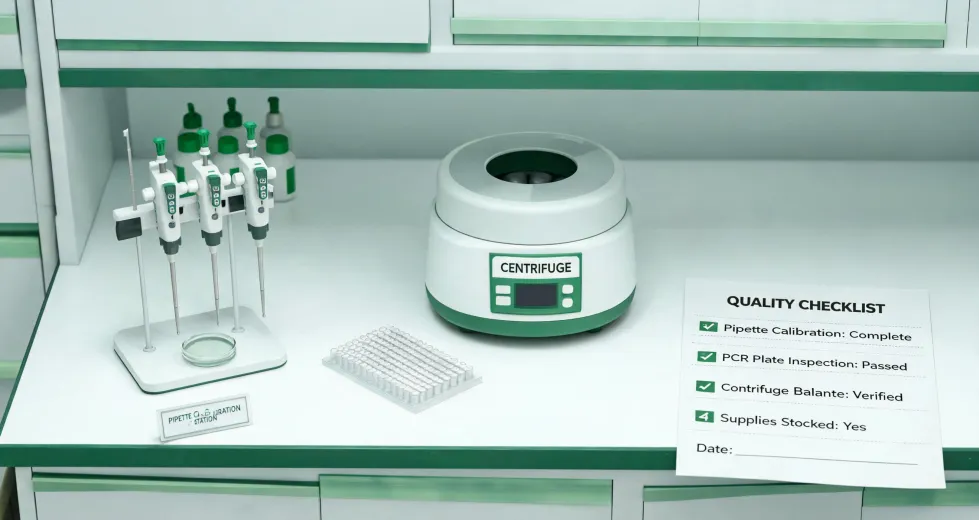
In Q2 2023, I signed off on a bulk order of pipettes from a lesser-known brand. The unit price was 40% lower than our usual Eppendorf Research plus models. My boss was happy. Three months later, we'd spent $1,800 on recalibration kits, $2,300 on replacement tips that didn't seal properly, and lost two weeks of experimental data because six pipettes drifted outside ISO 8655 tolerance. That "savings" turned into a $4,100 lesson.
Over the past 6 years managing procurement for a 120-person biotech company, I've audited about $1.2 million in lab equipment spending. Here's what I wish I'd known from day one.
The Surface Problem: Everyone Looks at the Price Tag
I get it. Budgets are tight, and when you're comparing quotes for a new Eppendorf Galaxy 170R CO2 incubator, the price difference between vendors can be $2,000–$3,000. Same for electronic pipettes – you see a $900 option next to a $1,400 Eppendorf Xplorer, and the choice seems obvious.
But here's the thing: the price tag is the least informative number on the quote.
The Deeper Reason: Three Costs Nobody Tracks
1. Calibration & Compliance Overhead
Every liquid handling device needs periodic calibration. For manual pipettes, that means sending them out every 6–12 months. Some brands charge $40–$60 per pipette. Others offer flat-rate annual contracts. One vendor I evaluated charged $25 per pipette but required shipping to a central facility with a 3-week turnaround. The downtime alone cost us more than the calibration fee.
The Eppendorf pipette manual is very clear about recommended calibration intervals and procedures. But when I looked at clones, their manuals were vague. I've never fully understood why some manufacturers bury these details – my best guess is they'd rather you discover the hidden costs later.
2. Training & Usability Friction
Switching to electronic pipettes can reduce RSI and improve reproducibility. But not all electronic pipettes are created equal. The Eppendorf Xplorer, for example, has a menu that takes about an hour to learn. A cheaper brand I tested had a screen that literally required an 8-step sequence just to change volume units. That's not a user error – that's a design failure. The cost of re-training 15 lab staff over six months? About $2,500 in lost productivity.
Honestly, I'm not sure why some companies prioritize complexity over usability. It might be a licensing issue, or maybe they just don't test with real users.
3. Supply Chain Fragility
When you're running a 37°C, 5% CO2 cell culture incubator, you cannot afford unplanned downtime. The Eppendorf Galaxy 170R has a well-known reliability record – but even that is only as good as the local service network. I once compared two quotes for the same model: Vendor A included free on-site calibration for the first year; Vendor B's quote was $800 cheaper but required us to ship the entire unit for any service. You can guess which one cost more in the end.
The Real Cost: Let's Do the Math
I wish I had tracked every service call and recalibration more carefully. But here's a concrete example from my 2024 audit:
- Budget option (pipettes): $4,200 initial purchase → $1,100 calibration in Year 1 → $2,800 in lost experiments from drift incidents → total Year 1 cost: $8,100
- Eppendorf Research plus: $6,800 initial purchase → $550 calibration (flat-rate contract) → zero drift-related losses → total Year 1 cost: $7,350
That's a $750 difference in favor of the more expensive option, and the gap grows wider each year because the budget option needed replacement after 18 months while the Eppendorf pipettes are still going strong after 3 years.
The Misconception That Keeps Mistakes Alive
It's tempting to think that equipment is equipment, and as long as the specs look the same, the price is all that matters. But this was true maybe 15 years ago when the market was more standardized. Today, the variability in service support, consumables compatibility, and calibration infrastructure is enormous.
One more thing: I've heard people ask, "What is an operating table?" – in our lab context, it's a completely different world. Operating tables are for surgical settings, not for research labs. But the procurement principle is the same: the cheapest surgical table might lack ergonomic adjustments, leading to surgeon fatigue and longer procedures. In the lab, your "operating table" is your bench and your equipment, and the same cost logic applies.
What Actually Works
I don't have hard data on industry-wide failure rates, but based on 6 years of tracking every invoice, my sense is that about 30% of lab equipment purchases end up costing more than expected due to hidden costs. Here's the simple framework I now use:
- Request a total cost of ownership (TCO) spreadsheet from every vendor – include calibration, training, service contracts, and consumables.
- Ask for references from labs that have used the equipment for at least 2 years.
- Factor in the cost of one failed experiment per year – if the equipment isn't reliable, that's easily $500–$5,000 per incident.
- Never sign a multi-year commitment before a 3-month trial, especially for electronic pipettes or CO2 incubators.
I still kick myself for not building vendor relationships earlier. The goodwill I'm working with now – free loaners when a unit is being serviced, discounted calibration packages – took three years to develop. That's worth more than any initial price discount.
One last thought: the Eppendorf Galaxy 170R CO2 incubator price you see online is just the starting point. Add installation validation, temperature mapping, and a 2-year extended warranty. Then compare that to the "cheaper" competitor that doesn't offer those services. You'll often find the gap shrinks to 10–15%. And for that premium, you get peace of mind, less downtime, and maybe, just maybe, a few extra data points that actually make it into Nature.
Prices as of January 2025; verify current rates.