A lab manager shares a costly mistake when ignoring the Eppendorf centrifuge 5425 manual, and how it changed their approach to lab equipment setup and documentation.
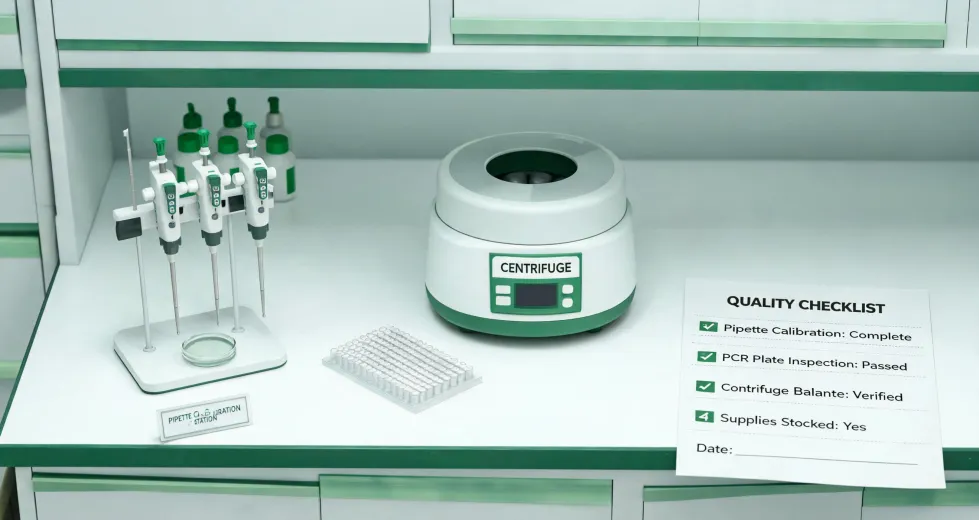
If you just bought an Eppendorf centrifuge 5425, here's the most important thing you probably don't know: the rotor balancing limits in the manual aren't suggestions. They are the difference between a machine that works for a decade and a $3,200 repair bill.
I learned this the hard way.
When I first started managing our lab equipment orders, I assumed I knew how to run a centrifuge. Honestly, it's not rocket science, right? Put tubes in, press start. That mindset cost us.
What Actually Happened
In September 2023, we got a rush order for a new Eppendorf centrifuge 5425. The researchers needed it for a critical RNA extraction protocol. I oversaw the setup myself. I skimmed the manual — I thought, 'I've set up a dozen centrifuges. I know the drill.'
The issue was the rotor balancing. The 5425 manual clearly states the maximum imbalance for the standard rotor is 0.5 grams for specific tube configurations. I didn't verify the loading. The technician loaded it unevenly, running 1.5 mL tubes in a configuration that exceeded the spec.
The result? A catastrophic vibration event. The rotor assembly seized, damaging the drive shaft. The repair cost $3,200 and took two weeks. The experiment was ruined. The PI was furious.
That's when I learned never to assume 'same specifications' meant identical procedures across different models.
Why the Eppendorf 5425 Manual Is Actually Critical
From the outside, it looks like a centrifuge manual is just a list of specs and safety warnings. The reality is that modern, high-speed centrifuges like the 5425 have very specific operational tolerances. Ignoring them turns a precision instrument into a liability.
Most lab managers focus on the features — speed, capacity, noise level. They completely miss the 'fine print' on load balancing, acceleration profiles, and temperature control during high-G runs. That fine print is where the reliability lives.
The common question people ask is 'What's the maximum RPM?' The better question is 'What's the maximum RPM for my specific tube type and fill volume?' The manual answers the second question. Most people are too busy to read it.
What I Now Check Before Every New Centrifuge Setup
After that disaster, I created a verification checklist. Here's what we do before trusting a new centrifuge with precious samples:
- Rotor specific loading limits: We verify the manual for the exact tube type and fill volume. The 5425 manual has a dedicated chart on page 18 (as of the 2023 revision).
- Temperature calibration: The 5425's refrigeration system can drift. We run a temperature check at set points (4°C, room temp) before the first use.
- Acceleration and deceleration profiles: Different rotors and tubes handle G-forces differently. The manual specifies which profile to use for each.
- Rotor certification and balance check: We weight tubes to 0.1g precision now. It adds three minutes to the loading process and saves thousands.
I used to think this was overkill. Three budget overruns later, I know better.
The Hidden Cost of 'Just Getting It Running'
What was best practice in 2020 is often outdated in 2025. But the fundamentals of centrifugation haven't changed. The execution has transformed with digital controls and higher G forces, but the physics of balance is immutable.
Most buyers focus on price and features. They miss the setup and documentation costs that can add 30-50% to the first-year total cost. A rushed setup without proper manual reference is an accident waiting to happen.
From the outside, it looks like the centrifuge just works. The reality is that precision instruments demand precision setup. The manual is not a formality; it's a critical operational document.
The Question Nobody Asks About the Eppendorf Centrifuge 5425
People ask about RPMs, tube capacity, and noise levels. The question they should ask is: 'What is the specific imbalance limit for my intended rotor and tube combination?'
For the Eppendorf 5425 with the standard rotor (FA-45-24-11), the maximum imbalance is 0.5 grams for 1.5/2.0 mL tubes at maximum speed. Exceed that, and you risk mechanical failure.
According to Eppendorf's service documentation, imbalance-related repairs account for a significant portion of warranty claims. Most are avoidable with a 10-minute manual review.
Some Final Honesty
Not every lab will hit this exact problem. If you are running identical tube types at low speeds (under 10,000 rpm), the risks are minimal. The 5425's imbalance detection system is actually quite good — it will shut down before catastrophic failure in many cases. But it won't save you from the vibration that damages the bearings over time.
My experience is with a specific high-demand RNA protocol. Your mileage may vary. But the principle stands: read the manual before you trust the machine. It's the cheapest insurance you'll ever buy.