A practical guide for small labs and startups on navigating the lab equipment market, focusing on Eppendorf products and accessories like the Mini Spin centrifuge and Galaxy 170 CO2 incubator. We debunk the myth that budget-friendly equipment is always inferior and provide a decision framework based on your lab's specific needs.
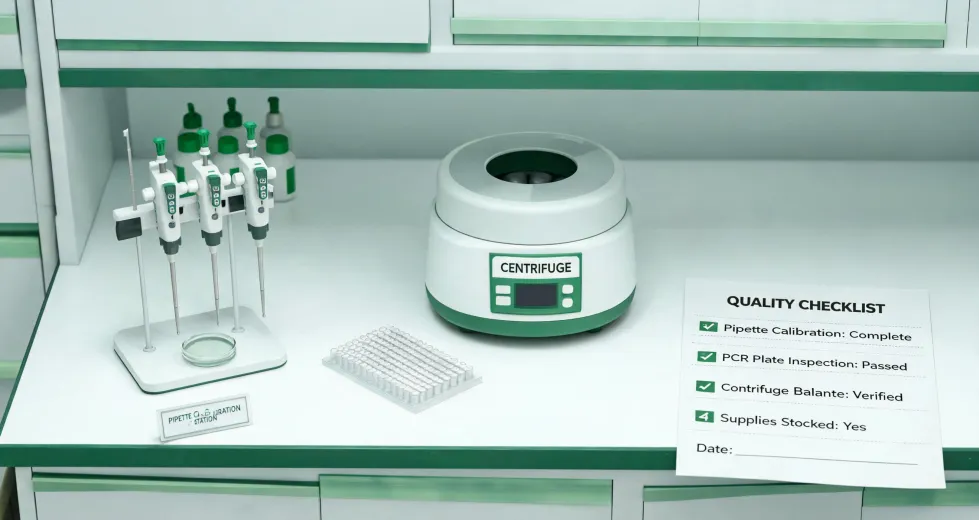
The Setup: My First Month and a $3,200 Mistake
In my first year handling orders for our lab (back in 2017), I made a classic mistake. Everything I'd read about scientific equipment said premium options—like Eppendorf—always outperform budget ones. I'd read the manuals, seen the specifications. I was convinced that if it wasn't the most expensive model, it was a compromise I couldn't afford. So, for a new cell culture project, I spec'd out a top-tier Galaxy 170 CO2 incubator from Eppendorf. I didn't even look at the price.
The total came to $3,200 for a single piece of equipment. The board approved it. We got it. It was great. But for the next six months, I watched it sit there, 30% full at best, because the project changed scope. It was overkill for what we actually started doing. That $3,200 could have funded a much-needed Mini Spin centrifuge and a new set of pipettes for another team. I still kick myself for that.
That's when I learned a hard lesson: the 'best' piece of equipment is the one that fits your actual work, not the one with the most impressive specs. Since then, I've ordered hundreds of pieces of lab equipment, from the humble Eppendorf Mini Spin centrifuge to the sophisticated Mastercycler PCR machines. And for the last 18 months, I've been maintaining a checklist to prevent others from repeating my errors.
So, What's the Real Question?
The real question isn't 'Should I buy Eppendorf or some generic brand?' The question is: What's the best fit for your specific workflow and budget? The problem is that most advice assumes there's a single 'right' answer. There isn't. It depends on whether you're a university lab with a single grant, a clinical lab running thousands of tests, or a biotech startup trying to get a proof of concept out the door.
I've seen three basic scenarios play out over and over again. Let's break them down.
Scenario A: The 'Core Essential' Buyer (e.g., a small university lab)
Your budget is tight, and you need the basics to work perfectly. You need a reliable centrifuge, probably the Eppendorf Mini Spin or the 5430 R. You need a CO2 incubator, maybe the Galaxy 170. And you definitely need quality pipettes and sterile tubes. But you might not need the world's fastest rotor or the smartest incubator controller with wi-fi.
For this group, my advice is to buy Eppendorf's 'bread and butter' models. The Research Plus pipettes are legendary for a reason. The Mini Spin centrifuge is simple, reliable, and nearly indestructible. In this scenario, you're buying peace of mind for the core functions. You're not trying to solve every edge case. Don't spend $3,200 on an incubator if a Galaxy 170 will do the exact same job for $1,800. (Circa 2022, that was the price difference, things may have changed).
Scenario B: The 'High-Volume' Buyer (e.g., a clinical or biotech lab)
Your workflow demands throughput. You're processing hundreds of samples. The centrifuge is running all day. The pipettes are in constant use. A cheap tip that leaks is a catastrophe, not an annoyance. A centrifuge that takes 2 extra minutes per run kills your schedule.
For this scenario, you should lean toward the top-tier Eppendorf models. The 5810 R or 5430 R centrifuges, the Xplorer or Repeater pipettes. The Mastercycler ep or nexus. Here, the premium isn't just for 'feel.' It's for throughput, precision, and calibration stability. A $50 calibration error on a $2,000 piece of equipment can cost you $10,000 in wasted reagents. The Eppendorf service manual and calibration support become a core part of the value proposition, not an extra cost.
Scenario C: The 'Scrappy Startup' (This is my personal favorite)
You have a budget that looks like a typo. You need to do cell culture, some PCR, a few gels. You're trying to prove a concept. You might be buying used. You are definitely thinking about 'compatibility' with things like a CT scan machine or a mobility scooter (which, ironically, is a completely different industry). You are the classic 'small client' that many salespeople ignore.
For this scenario, the conventional wisdom is wrong. People say 'never compromise on the centrifuge.' But I've seen a startup buy a used Mini Spin for $300 and a used Galaxy 170 for $800, and they produced publication-quality data for two years. The trick? They bought the correct, high-quality consumables (Eppendorf tubes and tips) because those do matter. The equipment was simple and robust. They knew exactly what they were doing, and they weren't distracted by unnecessary features. Never expected the used budget gear to outperform a new 'economy' model. It wasn't the gear; it was the knowledge of how to use it.
How to Figure Out Your Scenario
The key is to be honest with yourself. Answer these three questions:
- What is my primary failure mode? Is it 'running out of money' or 'running out of data'? If it's money, lean toward Scenario A or C. If it's data, you probably need Scenario B.
- How critical is throughput? If you're doing one experiment a week, a top-tier centrifuge is a waste. If you're doing 100, it's a necessity.
- What does the rest of your lab look like? If you have a brand-new top-tier CT scan machine (and are paying for it), you probably shouldn't get a cheap pipette. If you're building a lab from used furniture, a used Eppendorf Mini Spin is a perfect fit.
It's tempting to think you can just compare unit prices. But as of January 2025, I've found that the total cost of ownership for a piece of Eppendorf equipment vs. a generic one is often within 10-15% over 3-5 years, because of calibration costs and reliability. The difference isn't the sticker price; it's the fit for your specific workflow.
Small doesn't mean unimportant—it means potential. The vendors who treated my $200 orders seriously in 2017 are the ones I still use for $20,000 orders today. That's the lesson I try to pass on. Don't discriminate against the small order. And don't assume the expensive piece of gear is the right one. Start with the work, then pick the tool.