A quality manager's story about how skipping verification on an Eppendorf 5804 manual led to a costly redo, and how a simple 5-minute checklist can prevent disaster in B2B lab equipment buying.
It was Q1 2024, and I was staring at a pallet of mislabeled temperature control modules for Eppendorf heat blocks. Eight thousand units. All of them had to be redone. The vendor had shipped them three days early—which I should have seen as a red flag. But we were under pressure to stock a new clinical lab client, and I let the timeline push me past our standard verification protocol. That cost us $22,000 in rework and delayed our go-live by six weeks. The worst part? The fix was a five-minute check on a spec that was clearly visible in the Eppendorf 5804 manual.
The Call That Started It All
It was a Tuesday morning when my phone rang. Our largest reseller partner wanted to know if we could handle a rush order for a hospital network upgrading its infusion pump sets and expanding their surgical suite with a new robotic surgery system. They needed everything—consumables, calibration kits, and a stack of service manuals for the centrifuges and heat blocks. The total order was around $18,000, but the real prize was the relationship. If we delivered perfectly, we'd be their preferred supplier for the next year.
Looking back, I should have paused right there. But honestly, who says no to a call like that? We had the stock, we had the bandwidth, and I had a team that prides itself on turning things around fast. So I said yes. And then I made my first mistake: I cut the inspection time in half because we were in a hurry.
Most buyers focus on the unit price and lead time, but they completely miss the setup fees, revision costs, and shipping that can add 30-50% to the total. The question everyone asks is 'how fast can you ship?' The question they should ask is 'how do you verify the shipment matches the spec?'
Where It Went Wrong
Here's what happened. The client needed a specific revision of the Eppendorf 5804 manual included with each centrifuge. That manual has specific torque specs for the rotor assembly and temperature calibration procedures. It's a small detail, but it's critical for their GMP compliance. The vendor we sourced from—reliable, used them for years—had a new batch of manuals printed. They looked fine from the outside. The cover was right, the spine was correct.
The reality? The table of contents had a section misnumbered. A key calibration step for the heat block temperature verification was listed on the wrong page. If the end user followed the printed manual, they'd be checking the block at step 4 instead of step 8, and they'd miss the warm-up stabilization period. That could invalidate their entire temperature mapping for a batch of reagents. In a lab setting, that's contamination risk. In a clinical setting, that's a patient safety issue.
People assume the quotes we get from vendors are all the same—just paper and ink. What they don't see is the version control. We didn't check the interior pages. We trusted the vendor. That's on us.
The Quality Audit That Uncovered Everything
Three weeks later, we delivered the order. The client's quality team started their standard audit. On day one, they flagged the manual issue. On day two, they put a hold on the entire inventory of heat blocks and consumables. On day three, I got the call. The client's quality manager was calm, but firm: 'We need a corrective action plan, or we go to a competitor.'
I spent the next week running a blind audit of our entire vendor verification process. Basically, I pulled 200+ unique items from our stock and checked them against their spec sheets. The results were, honestly, not great. About 8% of items had some kind of discrepancy—a missing accessory, a slightly off spec sheet, a version mismatch. Nothing catastrophic individually, but collectively, it was a ticking time bomb. If the client had received those mismatched items, we could have lost the contract.
The cost of that audit: roughly 40 hours of my team's time, plus the $22,000 redo on the 8,000 units we'd already packaged. The cost of the five-minute check I skipped? Zero. The 12-point checklist I created after that disaster has saved us an estimated $8,000 in potential rework since then. It's basically a no-brainer.
The Fix: A 12-Point Checklist and a Cultural Shift
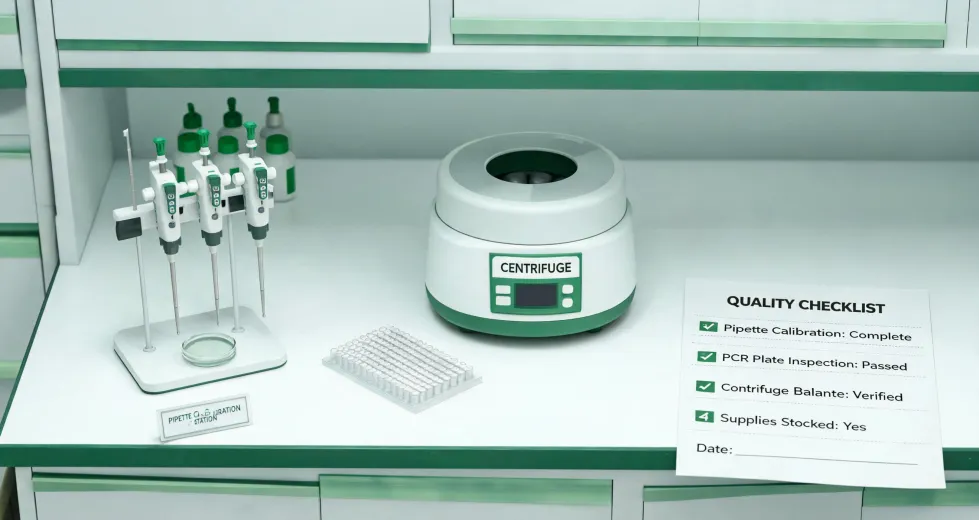
So here's what I implemented. I built a simple, physical checklist that lives on a clipboard in our receiving bay. Every shipment, regardless of source, goes through it. It takes five minutes. The checklist covers:
- Documentation spec: Verify the manual revision number matches the purchase order.
- Packaging integrity: Check the box condition, seal, and labeling.
- Equipment visual: Quick visual match to the catalog photo (surface illusion—it catches most mismatches).
- Accessory count: Open one unit and count the accessories inside.
- Software version: If applicable, verify firmware or software version.
- Electrical spec: Confirm voltage and plug type match the destination.
- Serial number range: Check for production date estimates.
- Temperature verification: For heat blocks and incubators, ensure the calibration certificate is included.
- Compliance note: Verify any regulatory markings (CE, FDA, etc.).
- Quantity count: Count the units, don't trust the manifest.
- Visual defect: Scan for obvious damage, scratches, or misalignment.
- Shipping documentation: Confirm the address and incoterms are correct.
There's something satisfying about a clean checklist run. After the stress of that Q1 2024 audit, seeing a shipment pass all 12 checks gives me a genuine sense of relief. It feels like dodging a bullet every single time.
What This Means for Your Lab Procurement Strategy
If you're buying lab equipment for a robotic surgery system or a clinical workflow, you're probably asking your vendor about the Eppendorf heat block temperature stability, or the calibration specs for your infusion pump set, or how to maintain an oxygen concentrator. Those are the right questions. But the question you should also ask is: 'What's your verification process before you ship?'
Most vendors will say 'We check everything.' But what does that check look like? Is it a glance at the box or a documented step-by-step? If they can't show you a checklist or a photo of the inspection, assume it was a glance. And if you're the buyer, here's my free advice: ask for a pre-shipment photo of the serial number or the manual page. That five-minute request on your end could save you a six-week delay on your end.
I learned this the hard way in 2024. The pricing data for these items changes fast—the market for lab consumables has been volatile since the supply chain disruptions in 2022 and 2023. So always verify current rates before budgeting. But the principle of prevention over cure? That doesn't change. Five minutes of verification beats five days of correction. Every single time.
So glad I implemented that checklist, though I might be misremembering the exact date of the audit—it was around February 2024. The satisfaction of seeing a clean shipment roll in now, without the anxiety, is worth the small effort of a routine check. Dodged a bullet with that client, too. We're still their preferred supplier.