A lab manager recounts a costly mistake that taught him the true value of paying for guaranteed, expedited shipping on critical lab equipment and consumables, especially when facing a tight deadline.
The Setup: A Routine Order with a Hidden Time Bomb
Back in March 2023, we were gearing up for a major presentation to a potential investor. The whole lab was buzzing. My boss wanted to demonstrate our new cell culture workflow using our Eppendorf Galaxy 170 CO2 incubator, which required a specific set of sterile, pre-filled 96-well plates we only used for this kind of high-throughput work. We were out. Standard operating procedure (as I thought) was to order from our usual consumables supplier. Their catalog showed the exact plates we needed, price was decent, and they quoted a standard 5-7 business day delivery.
Here's where my brain made the classic mistake. The presentation was in 9 days. 5-7 days for delivery? No problem. Plenty of buffer, right? (Honestly, I even thought I was being clever by ordering early). I placed the order on a Tuesday. Easy.
The Turning Point: The 'Probably' Trap
By Friday of that week, the order status still showed 'Processing.' I called the supplier. "Oh, that item is currently on backorder from the manufacturer," the rep told me. "Should ship out sometime next week."
My stomach dropped. "Sometime next week" was not an answer. The presentation was on Thursday. I asked about expediting. They could rush the shipping from the manufacturer for an additional $180. But the standard delivery was already paid for. I hesitated. (Looking back, I should have just said yes immediately. At the time, I was hung up on the principle of paying extra for something that was their stock issue. Ugh.)
Most buyers focus on the per-unit pricing and completely miss the cost of delivery uncertainty. The question everyone asks is, 'What's your best price?' The question they should ask is, 'What's the guaranteed latest delivery date for my event?'
I didn't pay for the rush. I gambled on 'probably'.
On Monday of the presentation week, the order had still not shipped. Tuesday afternoon, I got the notification: it had finally left the manufacturer's warehouse. There was zero chance it would arrive by Wednesday.
I had to go to my boss on Wednesday afternoon and explain we wouldn't have the critical consumables for the investor demo. The look on his face... (note to self: never let this happen again.) We scrambled. I spent three hours calling every lab supply house in a 50-mile radius to find the plates locally. We found a small distributor who had a case. They charged a premium, plus I paid for a courier to pick them up. Total cost: $400. The original order, which eventually arrived on Friday, was about $250. We wasted about $650 and my credibility took a serious hit.
The Reckoning: What I Actually Paid For
After the dust settled, I did the math. The $180 rush fee would have cost us less than the panic, the last-minute courier, and the duplicate order. But more importantly, it would have bought us certainty. The alternative was missing a presentation that was worth a potential $50,000 investment.
In my opinion, the extra cost for guaranteed delivery isn't just about speed. It's about buying back your peace of mind and insulating your project from supply chain hiccups. Uncertainty has a real, quantifiable cost. That $180 wasn't a wasted expense; it was an insurance policy against a much larger failure.
The Checklist: My New 'Mistake-Proof' Ordering Process
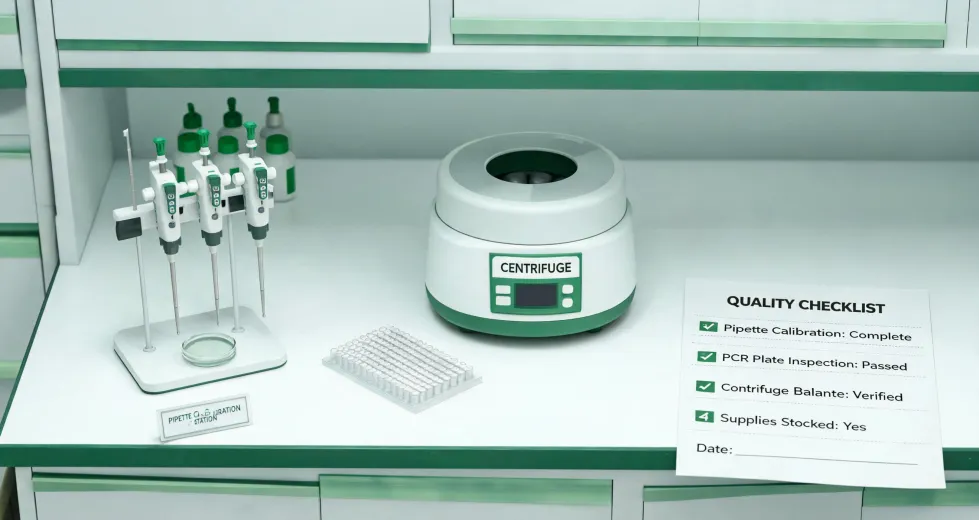
I now maintain a pre-order checklist that prevents this exact error. After the third time we nearly faced a similar issue (with a critical centrifuge rotor), I formalized it. We've caught 47 potential errors using this in the past 18 months.
My 3-Step Critical Order Check
- Identify the Drop-Dead Date: What is the absolute latest time this item can be in my hands? Is it for a presentation, a patient sample run, or just routine stock?
- Check Vendor Stock & Shipping Guarantee: Is it in stock? What is the guaranteed delivery window, not the 'typical' one? (Pricing accessed March 2023; verify current policies at your supplier's website).
- Calculate the 'Panic Premium': What is the cost of failure? If the answer is more than the rush fee, pay the rush fee. It's basically a trade-off between cost and certainty.
To be fair, not every order needs this level of scrutiny. You don't need to expedite a box of 50 mL conical tubes you use for routine media prep. But for anything that touches a deadline—a grant submission, a client result, a key experiment—assume the worst-case delivery time and plan accordingly.
It's tempting to think you can just compare unit prices. But identical specs from different vendors can result in wildly different outcomes when delivery timelines are tight. The 'always get the cheapest' advice ignores the value of a vendor's guaranteed delivery reliability. For our lab, for those critical items, the premium for speed is now a standard line item in our budget.
If you are ever in a similar bind while sourcing equipment or consumables, I cannot recommend enough the short-term cost of a rush order over the long-term cost of a missed opportunity. It's a bitter pill I've already swallowed for you.