An honest, admin-level FAQ covering Eppendorf Research Plus and Xplorer pipettes, and the unexpected questions that come up when ordering lab supplies. Includes pricing reality checks and workflow tips.
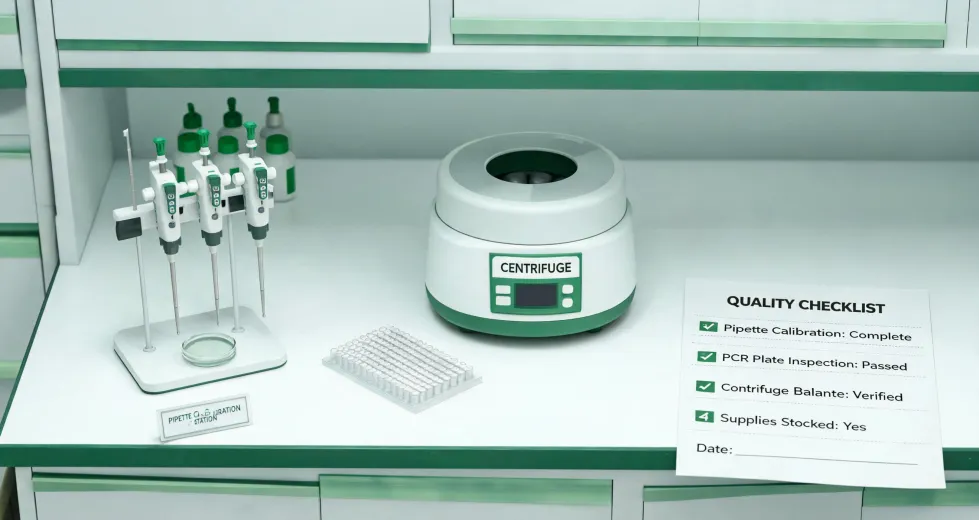
When I took over lab purchasing in 2022, I thought I had a handle on things. Pipettes, centrifuges, incubators—how complicated could it be? Turns out, pretty complicated. After processing about 150 orders and managing relationships with 6 different vendors, I've learned there are a few questions everyone asks, and a few more you should be asking. Here's what I wish someone had told me.
What's the difference between the Eppendorf Research Plus and the Xplorer electronic pipette?
This is by far the most common question I get. The short answer: one is manual, one is electronic. But the real difference is about workload and consistency.
The Research Plus is your workhorse. It's manual, which means you control the plunger speed. For a lab doing standard pipetting—say, 1-1000 µL—it's precise, reliable, and costs less upfront. We use them for routine PCR setup and buffer preparations. They're a no-brainer for basic workflows.
The Xplorer is electronic. It's way more expensive, but it handles repetitive tasks without user fatigue. If your lab is running ELISAs or large sample processing where you're pressing a plunger 500 times a day, the Xplorer saves your thumb and improves consistency. Honestly, I wasn't sold on the price tag until I saw the pipetting accuracy data from a validation run. The difference in RSD was noticeable—around 0.5% vs. 0.2% for the electronic at 10 µL. Not everything needs that, but for critical assays, it matters.
"People think manual pipettes are cheaper in the long run. Actually, if you factor in operator fatigue and error rates, electronic pipettes often pay for themselves in high-throughput settings. The causation runs the other way."
Can I use Eppendorf tubes with other brand pipettes?
Technically, yes. A 1.5 mL tube is a 1.5 mL tube, right? But here's something vendors won't tell you: the fit isn't always perfect. I've tried using generic tubes with our Research Plus pipettes, and sometimes the tips seat poorly. The seal isn't as tight, and you lose accuracy.
This was a point of contention with our lab manager. He wanted to save money by buying bulk tubes from a cheaper supplier. We ran a test—50 pipetting samples with Eppendorf tubes and 50 with generics. The variability was higher with the generics. Not catastrophic, but enough that I had to re-justify the budget. Now, I note in our procurement guidelines that for applications requiring precision (like qPCR), we stick with Eppendorf consumables. For buffer prep or washing steps, generics are fine.
Bottom line: Compatibility isn't a guarantee of performance. Test before committing.
What do I need to know about maintaining Eppendorf pipettes?
Three things: calibration, cleaning, and service manuals.
Calibration: Every 12 months is standard, but if your lab uses them heavily, you might need every 6. We do ours annually, but we keep a log. The cost for a full calibration cycle is around $80-$120 per pipette (based on our vendor quotes in Q4 2024; verify current rates). That adds up for a lab with 20 pipettes. We budget $2,000 annually for calibration. If I remember correctly, Eppendorf offers a service program that bundles calibration with cleaning. That might save you money if you're managing multiple units.
Cleaning: Contamination is a real problem. If a pipette gets used with radioactive or cytotoxic materials, you need to decontaminate it immediately. I once had a pipette sit for a week after a spill. The contamination spread to the tip cone, and we had to replace it. That cost us $150. Simple cleaning—disassembly, wiping, UV exposure—should be done after any use with hazardous materials. The service manual is your friend here.
Service manuals: Eppendorf provides detailed service manuals. I keep PDFs of the major ones. They include exploded diagrams and troubleshooting steps. For basic issues like a stuck plunger or inconsistent volume, you can fix it yourself. That saves the cost of shipping it back to the manufacturer. We've saved maybe $500 a year by doing minor repairs in-house.
How do Eppendorf centrifuges fit into the equation?
You asked about pipettes, but centrifuges come up a lot in procurement discussions. Eppendorf's centrifuges (5810R, 5430R, MiniSpin) are solid, but they're focused on low-to-mid volume work. If you're pelleting bacteria or spinning down blood samples, they work great.
The surprising thing I learned: not all rotors are compatible with all tubes. I assumed a 5810R could use any 15 mL tube. Wrong. Some tubes don't fit the rotor buckets properly, leading to balance issues. We had a incident where a balancing error caused a rotor to jam. That was a $400 repair. Now, I cross-reference the tube specifications with the rotor compatibility chart before ordering. It sounds obvious, but it took a mistake for me to learn it.
What about the 'hidden' costs of lab equipment?
This is the question I wish more people asked. The sticker price is just the beginning. For a piece of equipment like an incubator (we use the Galaxy series), you need to consider:
- Installation: Some require gas lines or specific electrical setups. Our Galaxy 170R needed a CO₂ connection. That was $200 for the gas line installation.
- Consumables: HEPA filters, gaskets, CO₂ tanks. A CO₂ tank lasts about 2 months in a busy incubator. That's $60 per refill. Over a year, that's $360 you're not thinking about.
- Calibration: Temperature and CO₂ sensors drift. Annual calibration is around $250.
- Warranty: Extended warranty adds ~10-15% to the base price. I've learned it's worth it for high-use equipment. One service call can cost more than the warranty.
I always calculate the Total Cost of Ownership (TCO) now. It's made me look smarter to my VP when I present budget requests. The vendor who lists all fees upfront—even if the total looks higher—usually costs less in the end.
A quick note on the other terms you asked about
You mentioned continuous glucose monitors, ostomy supplies, and CPAP machines. These are separate categories entirely. For medical supplies, regulatory compliance matters more than lab precision. For instance, CPAP machine maintenance is about airflow and hygiene. The questions you'd ask there are about mask fit and filter replacement frequency.
For lab equipment, the purchasing logic is different. It's about validation, calibration cycles, and throughput. A CPAP machine won't need annual calibration; an Eppendorf pipette will. They're apples and oranges. But the principle of 'ask what's NOT included before the price' applies in both cases.
That said, if you're managing both lab and medical supply ordering, I'd recommend separate vendors. Mixing them leads to confusion in invoicing and support. At least, that's been my experience.
Final thoughts
There's no one-size-fits-all answer to lab equipment purchasing. The best supplier for a clinical lab running thousands of tests isn't necessarily the best for a research lab exploring rare diseases. Trust but verify. Ask for documentation. Run your own tests. And always, always check the service manual before you call for help.
Prices as of January 2025; verify current rates.