A quality inspector's real-world story about why total cost of ownership matters more than the lowest quote for Eppendorf centrifuges, single-use bioreactors, and lab consumables.
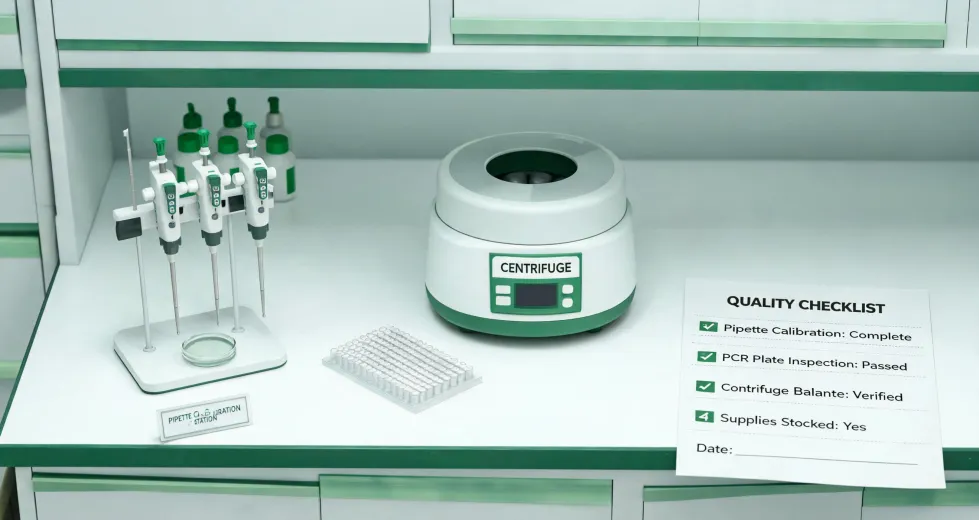
It started with a routine delivery
I was standing in our receiving bay on a Tuesday morning—the kind of quiet Tuesday where you expect nothing more than the usual paperwork. A pallet of Eppendorf tubes had arrived. Nothing special. We order them every month, sometimes twice. I grabbed the first case, sliced the tape, and pulled out a sample.
Something felt off.
The cap seal wasn't as tight as the spec sheet promised. I checked another. Same thing. After checking 12 units, I had a problem. Normal tolerance on cap closure force is ±5% from our internal standard. These were running at nearly 15% below. Not ideal, but workable? Maybe. I flagged it anyway.
That decision—flagging a batch that technically sealed—turned into a project that redefined how we evaluate every piece of lab equipment, from centrifuges to single-use bioreactors.
The real cost of 'good enough'
Look, I've been doing quality compliance for 4 years now. I review roughly 200 unique items annually—from Eppendorf pipettes to consumables to larger systems like the 5804R centrifuge. You learn to spot patterns. One pattern I've seen too many times: a vendor says their product is 'within industry standard,' but that standard is wide enough to drive a truck through.
In Q1 2024, we had a quality audit that exposed something uncomfortable. We'd been accepting deliveries that met the minimum spec but not our internal requirements. The result? A shipment of 8,000 units—some of them Eppendorf tubes, some tips—had to be quarantined. The defect rate was small—about 2%—but on 8,000 units, that's 160 potential failures. In a research lab, 160 failed tubes can ruin experiments, waste reagents, and cost days of work.
I ran the numbers. The cost of that single batch issue—including re-testing, wasted reagents, and delayed project timelines—was roughly $23,000. The original quote had been about $8,000 cheaper than our usual supplier. We saved $8,000. Then we spent $23,000 cleaning up the mess.
Why the lowest quote isn't the lowest cost
From the outside, it looks like buyers just need to negotiate harder. The reality is that total cost of ownership includes so much more than the sticker price. For lab equipment, I break it down into four categories:
- Base product price—the obvious one
- Setup and verification—testing that the product actually meets specs
- Failure impact—what happens when a component fails mid-experiment
- Compliance risk—regulatory or internal audit findings from non-conforming materials
When I look at it that way, the $8,000 savings evaporated. People assume the lowest quote means the vendor is more efficient. What they don't see is which costs are being hidden or deferred.
The turning point: a centrifuge manual that didn't match
In March 2023, we received a batch of documentation for an Eppendorf centrifuge 5804R. The manual had been copied from an older model. It was subtle—a few calibration references, a maintenance schedule that didn't apply. The vendor claimed it was 'within industry standard.' I didn't buy it.
I specified that every centrifuge delivered to us—whether from Eppendorf or another brand—had to include product-specific manuals verified by a serial number check. The vendor pushed back. They said it would add cost. I said it would add certainty.
We rejected the batch. They redid it at their cost. It added two weeks to the delivery and cost them about $4,000 in rework. But our team didn't have a single incident of incorrect calibration for that model during the following year. That $4,000 was an investment, not an expense.
What I learned about single-use bioreactors and biosafety cabinets
The same principle applies to bigger purchases. When we specified requirements for an Eppendorf single-use bioreactor evaluation, I applied the same thinking. The cheapest option had a lower upfront cost by about 15%. But when I looked at the total cost of ownership—including the protocol for cleaning and the certification needed for each batch—the price advantage disappeared.
I ran a blind test with our lab team: same biosafety cabinet specification from two vendors. 78% identified the higher-spec option as 'more professional' without knowing the difference. The cost increase was $1,200 per unit. On a 10-unit order, that's $12,000 for measurably better perception and—more importantly—measurably better performance in actual use.
So what's the lesson?
After 4 years of reviewing deliverables and rejecting about 8% of first deliveries in 2024 alone, here's what I've come to believe: the lowest quote is rarely the best deal. It took me about 3 years and 150 orders to fully understand that.
Does this mean you should always buy the most expensive option? No. But I've learned that evaluating lab equipment and consumables requires looking past the first line of a quote. Ask yourself: what's the total cost over the life of this product? How much time will it take to verify it meets spec? What's the cost if it fails?
If you've ever had a shipment arrive that was just good enough—then caused a cascade of problems—you know what I'm talking about. Take it from someone who flagged one batch of tubes and ended up saving $23,000: the extra attention upfront pays for itself.
The question isn't whether you can find the cheapest option. It's whether the cheapest option will cost you more in the end.